Folklore of the Hill & Moor
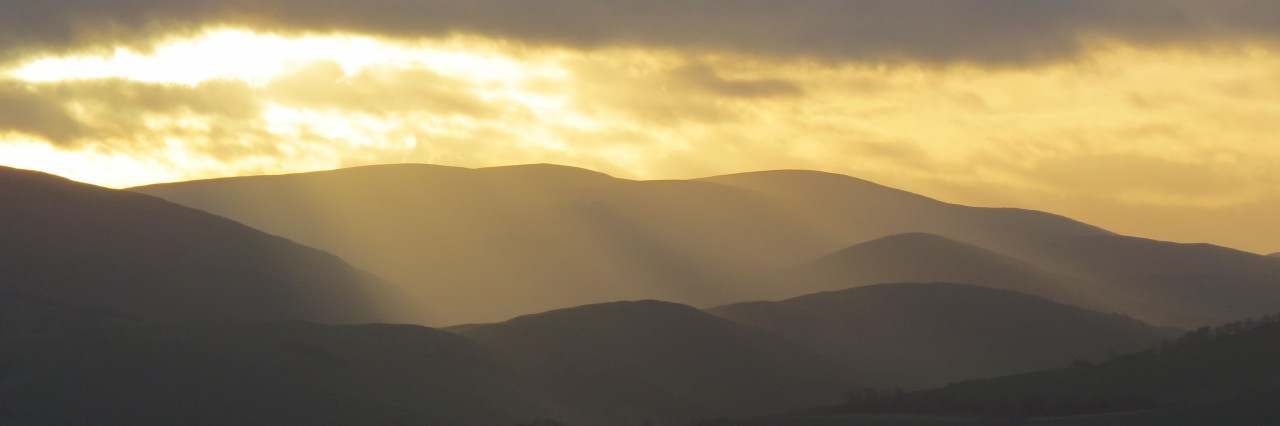
In the depths of the Cheviot Hills, many secrets hide. From fairy courts, and trickster spirits to the remains of Border Reiver hideouts and smuggling paths, the remote parts of the Northumbrian uplands are places of myth and mystery.
Once, these lands were known by the Brittonic name Bryneich, which later became Bernicia. It’s widely believed that this translates to “land of the mountain passes”, in reference to the deep valleys of Northumberland that divide the wild and inhospitable hills.
The people who dwelt in ancient Bryneich were an Iron Age, Celtic-speaking people, part of the tribal region called Gododdin. They built settlements in the valleys and “forts” upon the hilltops, their stone walls and ring ditches still visible on many peaks, creating the distinctive silhouettes of the Cheviots.
We know little about the beliefs of the Iron Age inhabitants of the hills, or the stories they told. Recent research suggests that the DNA of the people themselves was largely diffused into the that of the incoming Germanic tribes, via intermarriage and mixed families rather than any large-scale wiping out of the population. Whatever the case, their language disappeared, except for a few trace place names, and only a handful of stories carry the possible echoes of an older culture. Many folktales, however, bear clear resemblence to stories from the Germanic world in Nothern Europe, suggesting that they date at least to that transition period.
Cheviot Fairies
Many people associate fairy stories with the Celtic world, and specifically Ireland, but most of Europe at one time had their own fairy traditions. It’s likely that the Northumbrian fairies came in with the Anglians and Saxons, although possible that some could have older origins.
During most of the Medieval period in England, fairies were called elves, and the earliest records suggest that elves were viewed as a separate race of people or beings, living in secret, but not necessarily with any magical properties. They were viewed warily, as potentially dangerous beings to be protected against.
The term fairy or faerie, and the related word fae, came into the British Isles in the later Medieval period from the old French word feie. With it came new stories and traditions, most notably in the border region the idea of the “fairy court”. Many of the oldest attested stories of the Cheviots feature fairy royalty, with their own sumptuous courts, hidden from human eyes beneath the hills.
One such court was said to be near Rothley, on the Hart Burn; another at Old Fawdon Hill, where a farmer once had a narrow escape. A family of fairy nobility feature in the story of old Margaret, the howdie (midwife) of Elsdon, in Redesdale. Numerous hollows and springs in the hills were once said to be fairy haunts or dancing greens.
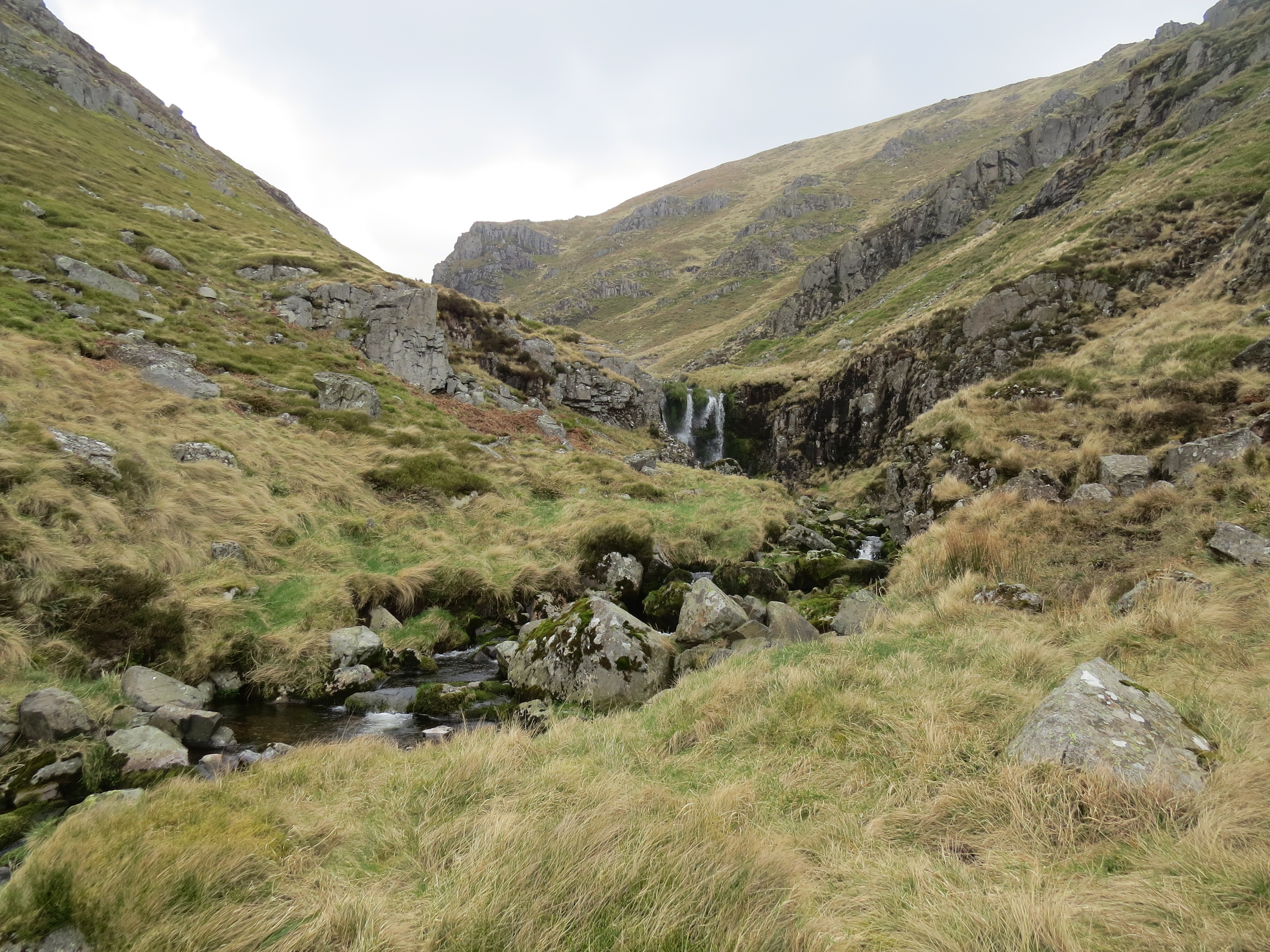
Perhaps the most closely associated place to fairies in the Northumbrian hills is the dramatic Hen Hole, a craggy ravine in the side of Cheviot itself, where the College Burn tumbles in a series of waterfalls. Here, it’s said that fairy music can be heard at times above the rushing stream, and once an entire hunting party, with Lord Percy himself at the head of it, disappeared into a tunnel beneath the hill, never to be seen again.
The fairies of the Cheviots are sometimes generous and sometimes sinister, and sometimes a mix of the two. The idea that the fairy folk were dangerous persisted over the centuries, with stories told of changeling children, of people snatched away, or nearly so, under the hills. To protect against this, people would carry iron, hang charms in the homes or leave an offering of food on the doorstep to keep the “Good Folk” happy. At the Pin Well, near Wooler, it was customary to throw pins into the spring as offerings.
Wayside Tricksters
The tracks through the Cheviots are wild and remote, traversing bogs and skirting crags, and always with the chance of rain or fog sweeping down to shroud the path. This is surely the reason the hills of Northumberland have more than their share of strange creatures of the moor and wayside that like nothing more than leading unwary travellers off the path.
Some, such as the dunnie or the braag, are shapeshifters, taking the form of an animal or an object, to guide or tempt us away from safety. Northumberland also has its own version of a Will o’ the Wisp, Jinny o’ the Lantern, whose treacherous, flickering light is probably based on marsh lights, caused by gasses from the bog and signifying a very real danger.
Others are more mysterious still. On the Simonside Hills above Rothbury dwell a race of dwarves known as the Duergar, a word taken directly from Dvergar, the Old Norse for dwarf. The Duergar too have been known to prey on lost travellers, causing illusions in the mist to draw people over clifftops.

The Man o’ the Moors
One of the more unique stories of the Cheviots tells of the Broon Man o’ the Moors. This distinctive nature spirit has a particularly ‘old’ feel, even if some of his folkloric attributions are more recent. Featuring in stories from both sides of the border, the Man o’ the Moors is a small, red-haired, human-like creature, dressed in leaves and moss, who protects the interests of the wild birds and beasts. Hunters tend to come to unpleasant ends if they encounter the Man o’ the Moors and disregard his warnings.
One such was the Cout of Kielder, a tall and proud young man who wore a helm decorated with bright rowan berries that protected him against all harm. Even this, however, couldn’t protect him from the wrath of the Man o’ the Moors after the Cout was found hunting where he shouldn’t.
Reivers, Outlaws & Smugglers
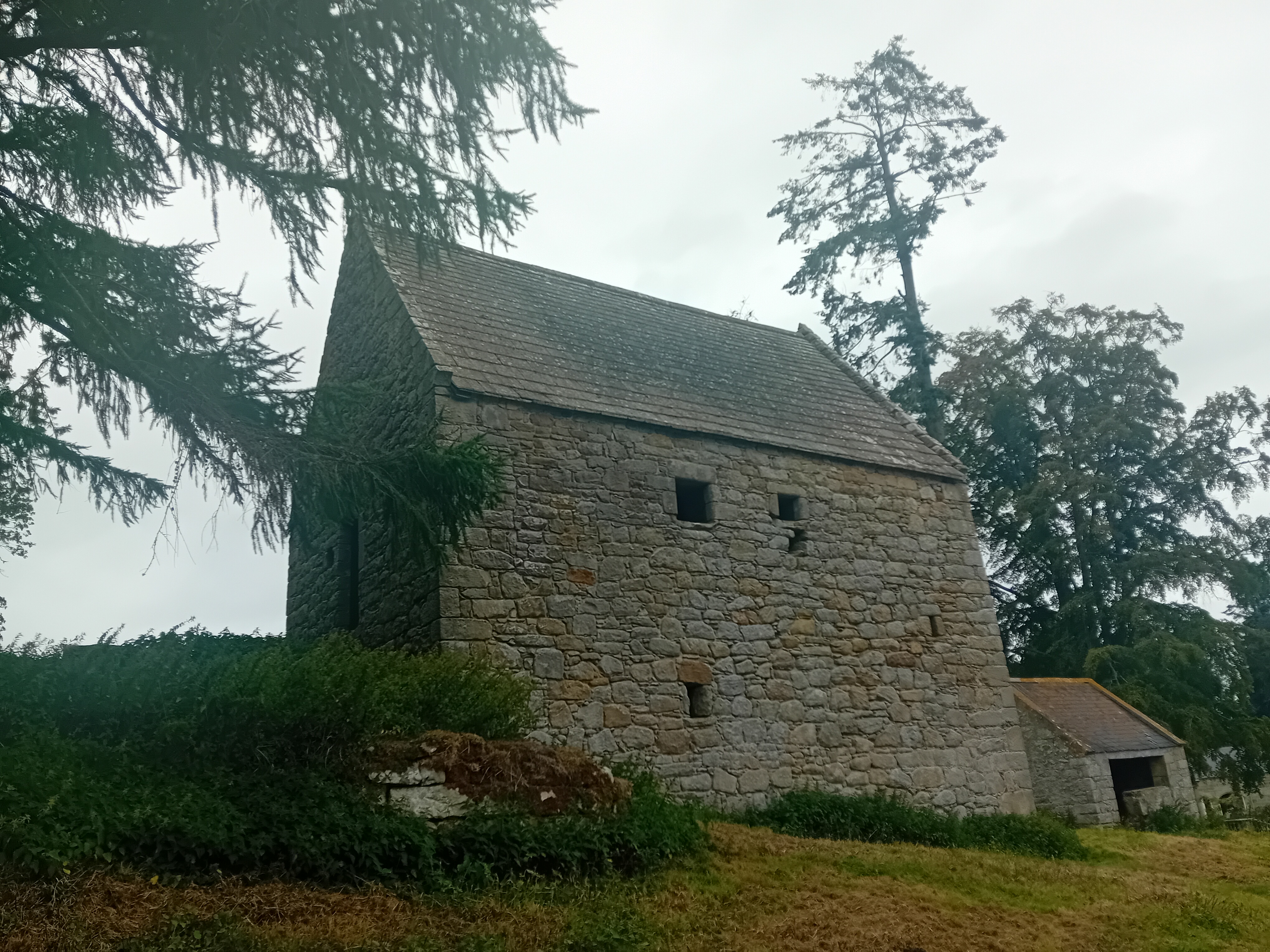
In the times of border warfare, reiving, or raiding, was a way of life in the hills. Valleys such as Redesdale and North Tynedale were notorious as strongholds of the Reiver Lords. Wild and largely outside of crown control, these warlike families conducted their business according to their own laws and honour codes.
Some individual Border Reivers, such as Parcy Reed of Redesdale, who was betrayed and murdered by his former friends, have gone down in legend, recorded in song and story. Their doings are often told with an air of romance and a wink of sympathy and their characters portrayed as daring or even loveable rogues, like the Potts brothers who lifted Lord Fenwick’s dapple grey mare.
Violence was never far away in the Reiving times, and where violence had occurred, bogles or ghosts tended to appear. Parcy himself is said to haunt Redesdale, but in some cases, the only memory that a murder had taken place in a paticular spot lay in the whisper of a spirit lingering there.
Neither did the violence in the hills end with the Union of the Crowns and the breaking-up of the Reiver graynes (clans). The famous story of Winter’s Gibbet, near Elsdon, involves the capture and execution of a murderer in 1791, and the legend of the Lang Pack, a thwarted attempt at robbery at Bellingham, is said to date to the same century.
In later years, many of the hidden valleys became known for smuggling. The lonely tracks where braags and dunnies lurked also carried salt from the coast into Scotland, and Scottish whisky into England, while the Coquet Valley in particular was famous for its own illicit whisky stills. Stories of wily smugglers and battles with excisemen replaced the tales of Border Reivers, but a certain sense of being outside the law persisted.
 Spindrift Stories